|
|
Pre-Civil
War: 1776 to 1860
|
Isaac
H. Williamson |
||
|
George
Franklin Fort |
||
|
Elias
P. Seeley |
||
|
William
S. Pennington |
|
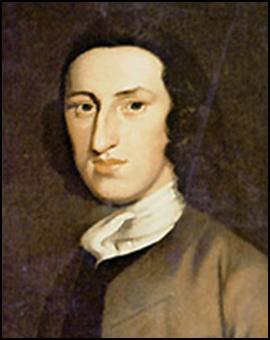
William Livingston Federalist
Livingston, who is of Scottish decent, was born into one of the wealthiest families in the 13 Colonies. His grandfather, Robert Livingston the Elder, was a son of the Rev John Livingston a lineal descendant of the fifth Lord Livingston. He was the Brother of Philip Livingston and cousin of Robert R. Livingston, the Chancellor, as well as the grandson of Albany, New York mayor, Pieter Van Brugh. Their wealth and an interlocking series of marriages with other major families gave them great political and economic influence in the New York Colony.
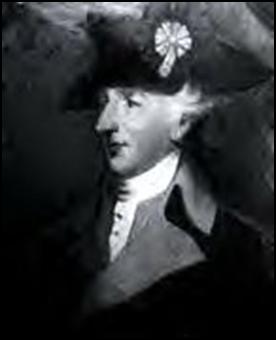
As the Revolutionary War approached, Livingston was sent by New Jersey to be a delegate in the First Continental Congress from July 1774 to June 1776. In 1775, New Jersey began organizing its militia, making Livingston a brigadier general, the highest rank in the state. In July 1776, when British troops started to build up on Staten Island, Livingston left the Second Continental Congress to help the New Jersey troops defend the Northern Jersey coastline (thus missing his chance to sign the Declaration of Independence). In August 1776 Livingston resigned his military commission to become the first governor of New Jersey elected under the new state constitution. The colony had just arrested the royal governor, William Franklin (son of Ben Franklin). Livingston served fourteen consecutive one-year terms until his death. He worked hard supporting the New Jersey contingent of the Continental Army. For much of the time between 1776 and 1779, the family was located in Parsippany for safety. Liberty Hall was frequently visited by British troops or naval forces since there was a substantial reward for Livingston's capture. In February of 1779, British troops, helped by local Loyalists, made a surprise pre-dawn attack at Elizabethtown with the purpose of capturing Livingston. He managed to barely escape. The family returned later in 1779 to begin restoring their looted home. Livingston's daughter, Susannah, married John Cleves Symmes in 1780 and became the stepmother-in-law of President William Henry Harrison. A descendent of William Livingston was Julia Kean, mother of New York Governor / Congressman Hamilton Fish. William Livingston's sister Sarah was married to Continental General William Alexander (aka Lord Stirling). After the war, Livingston felt that the Articles of Confederation were weak and needed to be replaced. In 1787 he led his state’s delegation to the Constitutional Convention at Philadelphia with the goal of creating a stronger central government for the United States. At first, he proposed the New Jersey Plan, which gave each state an equal vote in the legislature, but eventually accepted the Great Compromise. This was a bicameral legislature with one house based on population (House of Representatives) and the other on equality (Senate). Bitterly opposed to slavery himself, Livingston put his own feelings aside and hammered out a compromise (the 3/5ths Compromise) that assured the Constitution's acceptance by the Southern slave states. At the conclusion of the Convention, he signed the Constitution of the United States. Livingston helped to push New Jersey's ratification of the Constitution. On December 19, 1787, New Jersey was the third state to ratify it with a unanimous vote (38-0). He died in office at age 66. Livingston was originally buried in Trinity Churchyard in New York City, but was reinterred in 1846 at Green-Wood Cemetery in Brooklyn. Because he was the first Revolutionary governor, he is often cited as the first governor of New Jersey. The current numbering of New Jersey governors reflects this. The township of Livingston, in Essex County is named in his honor, as is Governor Livingston High School in Berkeley Heights. |

|
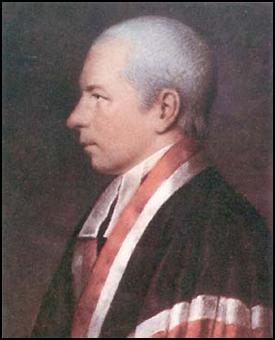
William Paterson Federalist
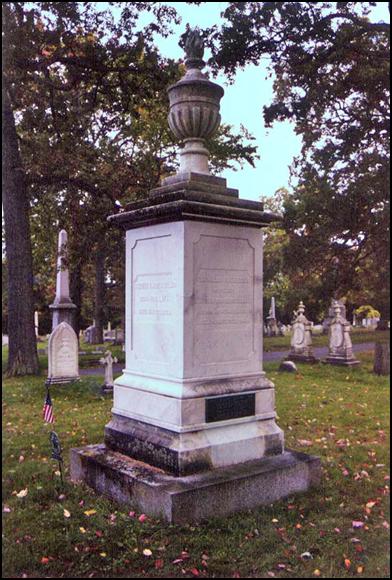
I was in Albany Rural Cemetery in during a trip that would cover five dead presidents back in October of 1999. Since he is in the same cemetery as Chester Arthur, I drove by and took a picture. After immigrating to America at the age of five (some documents say age two), Paterson attended local schools and the College of New Jersey (later Princeton University), where he graduated in 1763 (he is the first of 10 governors who graduated from Princeton). After graduating he studied law with the prominent lawyer Richard Stockton and was admitted to the bar in 1768. He quickly joined the patriot cause in the years following the French and Indian War. In 1776, he helped draw up New Jersey's state constitution. He was named an officer in the state militia, but never saw active duty. He assumed the post of attorney general of New Jersey in 1776 and remained in that position until after the war. Although Paterson missed the last month of the Convention's sessions, returning only in September to sign the Constitution, he nevertheless played an important role in the Convention's proceedings. Along with William Livingston, he proposed the New Jersey Plan (a unicameral legislative body with equal representation from each state), which based legislative representation on equality of the states. Believing in a strong central
government, Paterson was a member of the Federalist Party. In 1789, he was
elected to the U.S. Senate. When New Jersey governor, William Livingston died
in 1790, Paterson resigned from the Senate to become the state’s second
governor (he was replaced in the senate by future governor Philemon
Dickinson). Governors were chosen by the New Jersey state legislature to
serve one-year terms.
In 1793, he resigned as governor when George Washington appointed him
associate justice of the United States Supreme Court (Thomas Henderson took
over as acting governor). As a member of the Supreme Court, Paterson presided
over trials of people arrested in the Whiskey Rebellion. He was still a
member of the Court when he died in Albany at age 60.
Along with Paterson in Passaic County, William Paterson University is
also named after him. |
|
Richard Howell Federalist
Howell was born in Newark, Delaware. He was a twin (his twin brother
Lewis was a physician for the 2nd New Jersey Regiment and died during the
Revolutionary War) and one of eleven children of Ebenezer Howell, a farmer
and Sarah Bond – Quakers who had emigrated from Wales to Delaware in 1724. He
married Keziah Burr, the daughter of a wealthy landowner from New Jersey.
They would have nine children. He became an Episcopalian.
In 1774, he moved to New Jersey and became active in the movement for
American independence. He participated in the Greenwich Tea Party and writing
essays advocating independence. During the American Revolution, he served as
captain and later major of the 2nd New Jersey Regiment under
Colonel William "Scotch Willie" Maxwell from 1775 to 1779. He
participated in the 1775 invasion of Canada. In 1777, he participated in the
battles of Brandywine Creek and Germantown. At Germantown, the 2nd
New Jersey formed part of the reserve and as such attacked the Chew House in
which members of the British 40th
Regiment of Foot had barricaded themselves as the Continentals swept
through town. After a series of futile assaults, the Jersey troops were
forced to give up the attempt when the battle was lost and the Americans
retreated. He spent the winter of 1777-78 at Valley Forge. Through the spring
of 1778, the 2nd New Jersey foraged for supplies and skirmished
with the British and Loyalists for two months. At the end of May, the rest of
Maxwell's Brigade joined them at Mount Holly in New Jersey. On April 4-5,
1778, British forces repulsed Howell and his troops from Billingsport, New Jersey.
On June 28, the 2nd New Jersey formed a part of General Charles
Lee's advance force in the opening phases of the Battle of Monmouth Court
House. Hampered by confused orders and heavy pressure from the British, Lee's
troops retreated in disorder until they were met by the main army under
Washington. Howell and the 2nd New Jersey covered the retreat of
Lee's forces and fell back as reserves for the rest of the engagement..
In 1793, the Federalists controlled New Jersey Assembly selected
Howell to succeed Thomas Henderson as Governor (Henderson was
acting-governor). He would be selected for the next seven years. His most notable
actions as governor were in confrontations. During the Whiskey Rebellion in
September of 1794, a popular uprising conducted by Appalachian
settlers who resisted the excise tax on liquor and distilled drinks, near
Pittsburgh, he led the New Jersey militia into
Pennsylvania (governors were also commanders of the militias.) President
Washington, who was commanding the army, gave him command of the right wing
of the army. After the insurrection collapsed, Howell and the militia went
home.
In June of 1798, President John Adams signed the Alien and Seditions
Acts into law. Howell would use these acts in a dispute with the Newark Centinal of Freedom – a
Democratic-Republican leaning newspaper that operated from 1796 to 1823. A
number of Democratic-Republican militia officers attacked Adams for not
following the Constitution. Howell accused them of being part of a “shred of
a French faction.” He than brought charges of seditious libel against the
newspaper.
In February of 1799, an armed tax revolt among Pennsylvania Dutch
farmers called Fries’ Rebellion. It was in response to the taxes levied
during the Quasi-War with France. President Adams ordered the local states to
raise their militias in case they would be needed. Howell was quick to raise
2,000 militiamen ready to march. The rebellion was ended without the use of
the New Jersey militia.
When the Federalist lost control of the state legislature, Howell was
replaced as Governor by Joseph Bloomfield. The Democratic-Republican controlled
legislature charged Howell with the mishandling funds and possible
embezzlement. Howell died six months later in Trenton at the age of 47 with
his reputation under a cloud. His defenders claimed he lost tract of accounts
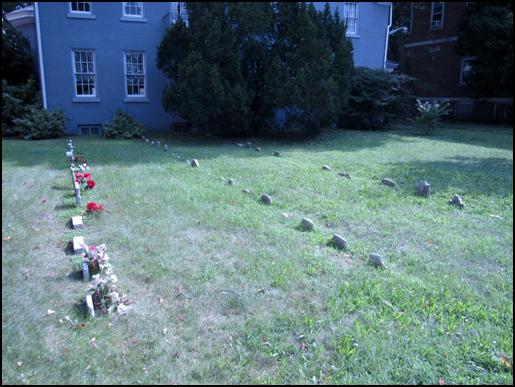
due to his failing health. He was the grandfather of Varina Howell, the wife of Confederate President Jefferson Davis. Howell Township in Monmouth County is named in his honor. |
|
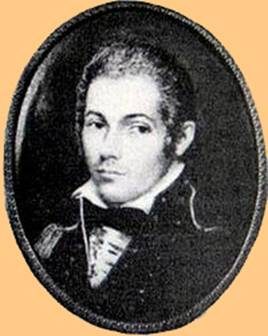
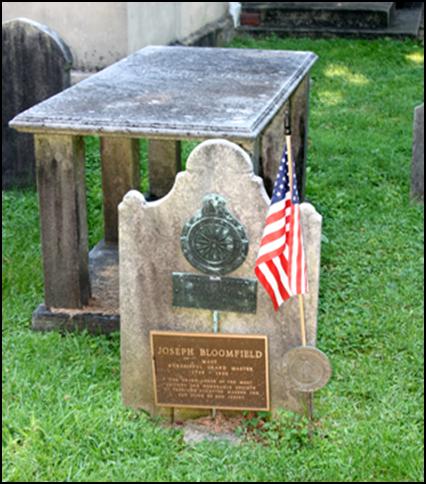
Joseph Bloomfield Democratic-Republican October 29, 1803 to October 29, 1812 Died:
October 3, 1823 in Burlington, New Jersey
Joseph Bloomfield was born in Woodbridge to Moses Bloomfield, a surgeon and an abolitionist, and Sarah Ogden. Moses Bloomfield served in both the Colonial New Jersey Assembly and the Provincial Congress at the start of the Revolution. He was educated at Reverend Enoch Green’s school in Deerfield, New Jersey. Bloomfield studied law, was admitted to the bar in 1775 and began his law practice in Bridgeton, New Jersey. He entered the Continental Army as captain in the 3rd New Jersey Regiment on February 9, 1776. He was promoted to the rank of major and was appointed judge advocate of the northern army. In 1777, he participated in the battles of Brandywine Creek and Germantown. At Germantown, the 3rd New Jersey formed part of the reserve and as such attacked the Chew House in which members of the British 40th Regiment of Foot had barricaded themselves as the Continentals swept through town. After a series of futile assaults, the Jersey troops were forced to give up the attempt when the battle was lost and the Americans retreated. Bloomfield was one of the 521 Americans wounded in the battle. He resigned from the Continental Army on October 28, 1778, after he was elected clerk of the New Jersey General Assembly.
During the Whiskey Rebellion in September of 1794, he led Federal and New Jersey state troops to put down the Whiskey Rebellion, a popular uprising conducted by Appalachian settlers who resisted the excise tax on liquor and distilled drinks, near Pittsburgh. In 1795, he served as Mayor of Burlington, New Jersey to 1800. In 1796, what had been known as the Old First Church was formed and was named the Presbyterian Society of Bloomfield in honor of Joseph Bloomfield. Being friends with Washington, Bloomfield became a loyal Federalist. After Washington left office in 1797, Bloomfield defected to the new Jeffersonian Democratic-Republicans. Throughout his political career, some suspected that he was still a Federalist at heart. Despite this, he helped cement the Democratic-Republican Party in New Jersey with him as the leader. He opposed the Federalist policies like the Alien and Sedition Act of 1797.
Bloomfield used his moral and political leadership to start a gradual emancipation of slavery in New Jersey (slavery would remain legal in New Jersey until the outbreak of the Civil War.) Like his father, he was a staunch abolitionist and longtime leader of the New Jersey Society for the Abolition of Slavery. During the administrations of Jefferson and James Madison, Democratic-Republican policies made it difficult for Bloomfield. He was forced to defend unpopular federal legislatures like the Embargo Act of 1807. Despite the attacks on the Democratic-Republicans, Bloomfield remained popular and continued to be re-elected governor year after year. At the start of the War of 1812 he was commissioned as a brigadier general in the United States Army by President James Madison on March 13, 1812. He spent most of his enlistment overseeing training of troops along the Canadian border and never saw combat. He served until June 15, 1815. Bloomfield was elected as a Democratic-Republican to the 15th United States Congress and reelected to the 16th Congress from March 4, 1817 through March 3, 1821, where he represented New Jersey's At-large congressional district. Bloomfield declined to run for the 17th Congress and retired to his mansion in Burlington. After the death of his first wife in 1818, he married Isabella Ramsey, who was 26 years younger than him. He died in 1823 at the age of 69. Bloomfield Township in Essex County is named in his honor. |


|
Aaron Ogden Federalist
A Federalist, he was elected to the U.S. Senate in 1801 to fill the vacancy caused by the resignation of James Schureman to 1803. He ran for re-elected in 1802, but lost to John Condit. Ogden, along with another future governor, William S. Pennington, tried to work out an agreement with the State of New York over the NY/NJ border. New York was claiming ALL of the Hudson River for themselves, up to the low-water mark of New Jersey. Nothing came of this as New York continued to bully New Jersey around. In 1803, Ogden was elected to the New Jersey General Assembly, where he served until 1812. That same year, Ogden was elected trustee of his alma mater, the College of New Jersey (later to become Princeton University), a post in which he served until his death. Ogden was elected to be governor in 1812 for a one year term (the last federalist governor of New Jersey). James Madison offered him a position of Major-General in the U.S. Army in 1813 (we were fighting the British in the War of 1812 at the time) - but Ogden said no. Instead, Ogden became involved in the steamboat business on the Hudson River. He bought into the Robert Fulton and Robert Livingston monopoly (given to them by the State of New York - another example of New York pushing New Jersey around). When another guy, Thomas Gibbons started operating his own steamboat between Elizabeth and New York City, Ogden sued him (claiming the monopoly) and won. However, the case went all the way up to the Supreme Court. Gibbons v Ogden was a landmark case decided by Chief Justice John Marshall against Ogden that made state monopolies unconstitutional. The decision was highly instrumental in giving more power to the federal government of the United States (the right to regulate interstate trade). The legal cost of the case along with the loss of the case itself to business caused severe financial hardships on Ogden and eventual imprisonment in New York for outstanding debt. His Princeton classmate and boyhood friend, Aaron Burr (former vice president) pushed through legislature prohibiting jailing Revolutionary War veterans for debt.
Freed from prison in 1829, he moved to Jersey City where he lived the rest of
his life practicing law. In 1830, he was appointed as collector of customs
and served until his death on April 19, 1839 in Jersey City. His grandson,
Frederick B. Ogden served as the Mayor of Hoboken from 1865 to 1867. His
grandnephew, Daniel Haines, served two terms as governor of New Jersey in the
1850's. |

 Ogden
Ogden|
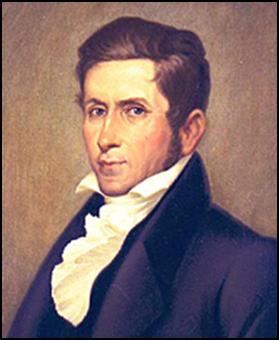
Mahlon Dickerson Democratic-Republican
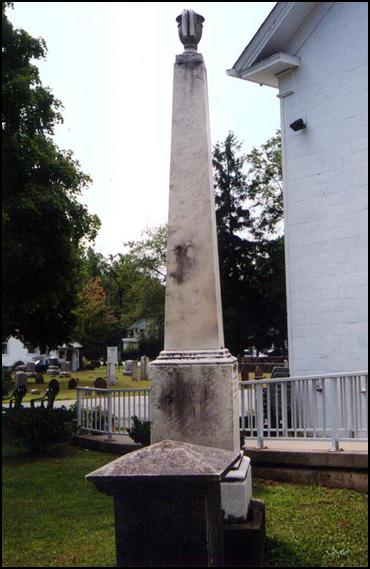
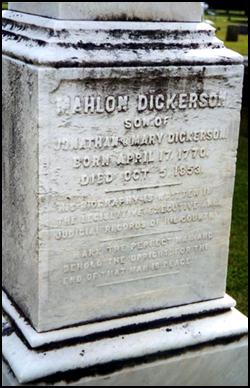
The son of Jonathan and Mary Dickerson, he was educated by private tutors and later graduated from the College of New Jersey (now Princeton University) in 1789. He then studied the law and was admitted to the bar in 1793. During the Whiskey Rebellion, he served as a private in the 2nd New Jersey Regiment Cavalry Militia. After his militia service, he settled in Philadelphia, and began practicing in Pennsylvania courts in 1797. He was named state commissioner of bankruptcy in 1802, served as adjutant general of Pennsylvania from 1805 to 1808 and as Philadelphia city recorder from 1808 to 1810. In 1810, he moved to Morris County, New Jersey and was elected to the New Jersey General Assembly in 1811 and served one term. In 1813, he was named as an associate justice to the New Jersey's Supreme Court for two years.
A Jeffersonian Democratic-Republican, he was elected governor in 1815. The following year, he successfully ran for the United States Senate and served from 1817 until March 3, 1833. He once resigned in 1829, but he was immediately reelected to fill the vacancy caused by the resignation of Ephraim Bateman and served for a total of 16 years of service. Andrew Jackson considered Dickerson for the vice-presidency but went with Martin Van Buren instead. Dickerson, who was very supportive of Jackson, was rewarded when Jackson appointed him Secretary of the Navy in 1834 (after he declined an appointment as Minister to Russia). He was re-appointed Secretary of the Navy by Van Buren. In 1840, he became judge of the U.S. District Court for the District of New Jersey. He was also a delegate to the New Jersey constitutional convention of 1844. Dickerson lived to the ripe old age of 83. |
|
Peter D. Vroom Democrat
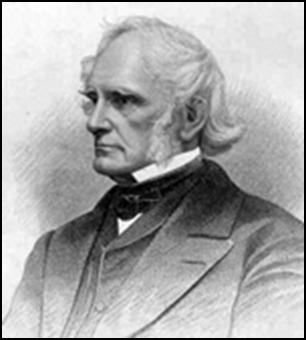
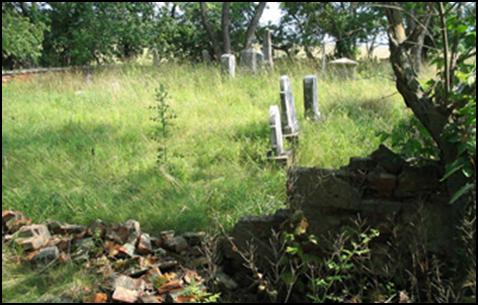
So, on a Monday afternoon, July 3, 2006, Debbie wanted to go shopping at the Short Hills Mall. After the shopping, we drove south to Somerville. We found the bridge over the Raritan River into Hillsborough (it was a brand new bridge that isn't even on Google Maps) and onto Rt. 625/River Road. Driving the length and back, Debbie spotted headstones under some trees on the south side of the road. Paul was right, there is almost no where to park and the road is too narrow to pull off to the side. However, I did find a small place to park and we went up to investigate. We walked up some stone steps into the trees. There is an old cemetery there surrounded by a brick wall that is crumbling in places (at right is the view at the top of the steps). As you can see, it doesn't get very much maintenance, however, it had been visited recently, probably on Memorial Day, so that flags could be placed. We found Governor Vroom toward the back of cemetery, along with other members of the Dumont family, making him the 29th Dead Governor on my list. The new question is, what cemetery is it? Is it the DuMont Cemetery or the Vroom Cemetery? We never found the other one. Find-A-Grave lists both cemeteries with Governor Vroom in it. The one listed on Find-A-Grave, that has a number of the other people we also found in to cemetery, is the DuMont Cemetery. So where is the Vroom Cemetery and why is Vroom listed as being buried there also? Hopefully someone will write me and clear up this mystery. Paul also thinks that because of this cemetery association with the Dutch Reformed Church in Somerville is the reason why Vroom's Congressional Record in the U.S. Congress is incorrect. Again, special thanks to Paul Von der Heyden because I never would have found Governor Vroom without his helpful information.
Vroom’s political career began as a
Federalist, like his father. However, by the 1820's, the Federalist Party was
on the decline. Vroom, like many other prominent New Jerseyian joined the
Democratic-Republican Party and supported Andrew Jackson in the Election of
1824 (Jackson lost because of the so-called 'Corrupt Bargain'). A Democrat
and the advocate of state construction of a canal from the Delaware River to
the Raritan River, Vroom was elected to the General Assembly from Somerset
County in 1826. Jackson did win the presidency in 1828,
and his followers, now called Democrats, dominated New Jersey politics. In
1829, Governor Isaac Williamson was forced to resign, after 13 years, due to
illness. The Democratically controlled legislature choose Garrett D. Wall to
replace Williamson. Wall declined to be governor so the legislature then
choose Vroom. Vroom believed in strengthening the
authority of the governor under the state constitution. To accomplish this
goal and stay within the limitations of the 1776 Constitution, Vroom
reintroduced the practice of sending messages to the legislature and meeting
with his party’s legislative caucus to influence its decisions. His efforts
produced a number of contributions to the state, especially in the areas of
prison and militia reform, education and internal improvements. To improve
New Jersey’s penal system, Vroom proposed building a new institution modeled
after the Eastern Penitentiary in Pennsylvania. He also proposed the
abolition of imprisonment for debt, which was enacted in 1842. In school
reform Vroom got the legislature to give part of the money in the school fund
to local towns to support public education.
Vroom's major accomplishment as governor was the construction of a canal and
a railroad through central New Jersey, but this did not happen without
controversy. In 1829, Vroom chartered the Camden & Amboy Railroad and the
Delaware and Raritan Canal Company to build the railroad and canal. The
following year, Vroom had the two companies merged together to get money for
the canal. They received a monopoly over all railroad and canal
transportation between New York and Philadelphia. Both the canal and
railroad, when finished, helped New Jersey economically.
In 1837 President Van Buren appointed him
Claims Commissioner to the Chickasaw tribe in Mississippi, where he was to
adjust land claims arising from the removal of the Choctaw Indians from the state.
In 1838, he was one of five Democrats that were elected to the U.S. House of
Representatives. However, Governor Pennington (who was a Whig), due to a
controversy surrounding the Monmouth County returns, claimed that Whigs had
won those seats. The House of Representatives, which had a small Democratic
majority, instead certified Democrat Vroom and the others to those seats.
Vroom ran for re-election in 1840, but lost. After this, he played an active
role in the New Jersey Constitutional Convention of 1844, where he urged the
delegates to increase the power of the governor. In 1846, he was involved in
revising the statutes of the state to bring them into compliance with the new
Constitution. In the Democratic National Convention of 1852, Vroom supported
for Franklin Pierce for the nomination (Pierce won the nomination and the
general election). Later, President Franklin Pierce appointed Vroom as the
ambassador to Prussia in 1853 where he served to 1857. During this time,
Prussia was fighting in the Crimean War. In 1865, he became the law reporter
of the New Jersey Supreme Court. This was a position held by his son who had
died a few months earlier. He remained in the position, living in Trenton,
until his death 12 years later. |

|
Samuel Lewis Southard Whig
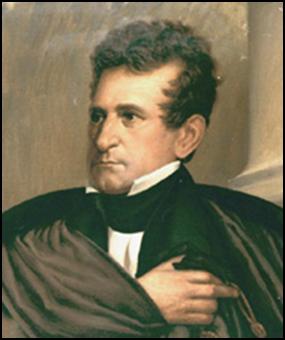
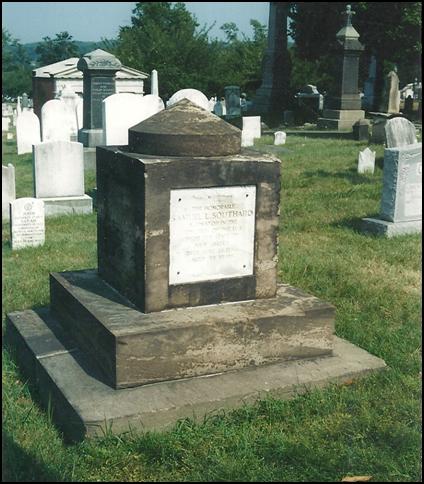
Southard's father was one of the founders of the Democratic-Republican Party in New Jersey. Southard graduated from the College of New Jersey (now Princeton University) in 1804. He began teaching after graduation and accepted a position as a tutor on a Virginian plantation. He studied law and he returned to New Jersey to set up a practice. Southard than married Rebecca Harrow of Virginia and became interested in politics. Southard seemed to like to jump from one political position to another. In 1815, he was appointed a justice of the New Jersey Supreme Court. A Democratic-Republican, Southard was appointed to fill a vacancy in the U.S. Senate in January 6, 1821. He was elected to that position, but resigned from the Senate on March 3, 1823 to become Secretary of the Navy in James Monroe's Cabinet which he served to 1829. Southard was the first New Jerseyian to hold a cabinet position. In the highly controversial Presidential Election of 1824, Southard had to decide which Democratic-Republican to support among the five running. He decided to support South Carolinian John C. Calhoun and ran his campaign in New Jersey. However, Calhoun soon pulled out of the race to concentrate on being elected vice president (which he successfully did). Southard was opposed to Andrew Jackson, who he saw as unfit, and secretly supported John Quincy Adams. Adams won the election when it was sent to the U.S. House of Representatives and kept Southard as his Secretary of the Navy. In the Election of 1828, despite Southard's campaigning in New Jersey, President Adams lost his bid for re-election to Andrew Jackson. Now a member of the Whig Party (like many other Jeffersonian Democratic-Republicans who couldn't stand Andrew Jackson), he hoped to be elected to the Senate, but lost to another future governor, Mahlon Dickerson. We actually had four Whig governors. In 1829, he was elected Attorney General for New Jersey. He was elected by the state legislature to be Governor in November of 1832 for a one-year term, but resigned four months later when he was elected again to the U.S. Senate in 1833. He was replaced with acting-governor Elias P. Seeley. In his short term as governor, Southard fired all Jacksonian Democrats from any office they held, he pushed for a new prison (which was introduced by his predecessor Governor Peter Vroom) and pushed for governors being chosen by popular election. The New Jersey Legislature elected Southard to the Senate to fill a vacancy in 1833 so he resigned as governor. Southard joined other Whigs in the Senate fighting President Jackson. He was re-elected to the Senate in 1838 and became President Pro Tempore of the Senate on March 4, 1841. He became the Senate's leader a month later when President William Henry Harrison died and Vice President John Tyler (Senate President) became President of the United States. Southard, who was a heavy set man suffered from ill health and died a year later at the age of 55. |
|
Philemon Dickerson 12th
Governor of New Jersey Democrat Served: November 3, 1836 to October 27, 1837
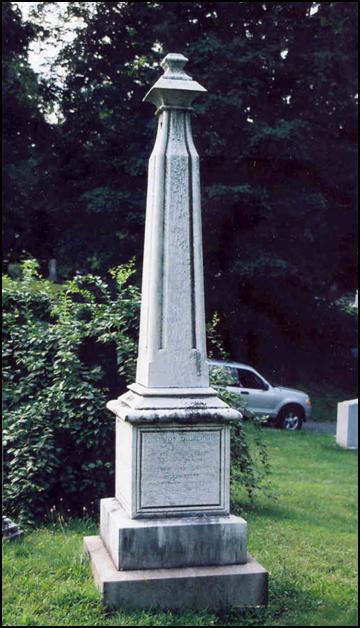
From there we drove south along Route 507 toward Paterson. We stopped in a Starbucks in Glen Rock for a frappuccino break. We arrived at Cedar Lawn by 4 PM. I knew the locations of the two dead governors here, but the cemetery doesn't identify the sections you’re in. It's like knowing an address but finding none of the streets or houses with signs. Anyway, we set out in the cemetery, which is quite large. I had been here once before to get dead vice-president Garret Hobart. After an hour, we had both of them (Philemon Dickerson and John Griggs) and headed home. Not a bad afternoon, three dead governors (giving me a total of 24) and a mocha frappuccino.
Philemon is the younger brother of Mahlon Dickerson, 7th governor of New
Jersey. Mother Dickerson was very creative when naming her sons. I don't
think anything outside a state park is named after him in New Jersey. He was
a Jacksonian Democratic-Republican like his older brother. In 1836,
the New Jersey state legislature choose Dickerson to a one-year term. Despite
winning, he was not able to take his seat for a year and a half. This was the "Broad Seal War" controversy.
Following the closely contested election of 1838, two groups sought admission
to the United States Congress from New Jersey. Both held commissions bearing
the great (broad) seal of the state; only the Whig commissions, however, were
legally executed and signed by the state governor, William Pennington.
Charging their opponents with election fraud and facing loss of control of
the House of Representatives, the Democratic Party majority in the House
refused to seat all, including Dickerson, but one Whig (who won with an
overwhelming majority). For a year and a half, New Jersey had only one
congressman. When it was proved that the county clerks in Cumberland and
Middlesex counties had suppressed the returns in certain townships that would
have given the Democrats a majority, the House, on February 28, 1840, seated
the five Democratic claimants including Dickerson. He lost
his reelection bid to Joseph Kille in 1840 and went on to serve as judge in
the District Court for the District of New Jersey, a post he held until his
death in 1862. |
|
William Pennington Whig
After being governor, President Millard Fillmore wanted Pennington to be the Governor of the Minnesota Territory, but Pennington said no. Instead, leaving the Whigs and joining the Republican Party, he was elected to the U.S. House of Representatives in 1858 to the 36th Congress. He took the seat that his cousin, Alexander Cumming McWhorter Pennington, held two years earlier. This was a tumultuous time in our history to be in Congress. During his first (and only) term, he was elected Speaker of the United States House of Representatives (one of only two from New Jersey) after months where the House was unable to decide on a candidate (the Republicans had a plurality, but not a majority, and the Southern Oppositionists who held the balance of power were unwilling to support either a radical Republican or a Democrat). Pennington was Speaker of the House in 1860 as the country headed for Civil War. He replaced James L. Orr of South Carolina as Speaker as Orr left to join the South Carolina secession convention (he later became a Confederate general). However, Pennington wasn't re-elected in November of 1860 (despite Lincoln's election - New Jersey didn't go Republican - the state voted for Democrat Stephen Douglas). He lost to Democrat Nehemiah Perry. He died two years later. |
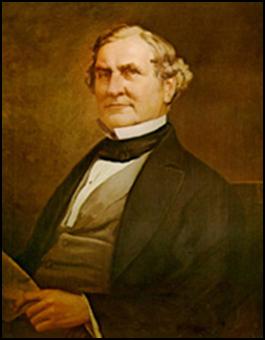
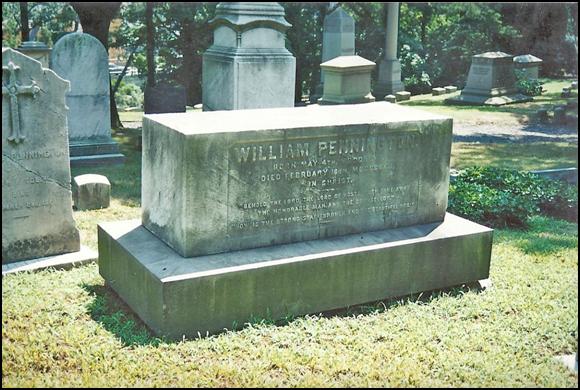
|
Daniel Haines Democrat
Haines ancestors had left England in 1637 and settled in Salem, Massachusetts. They would later be among the first settlers of Elizabethtown in New Jersey. Haines was the grandnephew of Governor Aaron Ogden of New Jersey (he is buried in Elizabeth and I already have him). Born in New York City, he was the son of Elias Haines, a successful New York merchant, and Mary Ogden. His early education was at the Academy in Elizabethtown and later The College of New Jersey (now Princeton University), where he graduated in 1820 and went on to practice law in Newton and Hamburg. He was married twice. He married his first wife, Ann Maria Austin on June 28, 1827. They had three daughters and two sons. His first wife died on December 8, 1844 and he later married Mary Townsend on July 6, 1865. One of his sons, Captain Thomas Haines of the 1st New Jersey cavalry regiment during the Civil War, was killed on June 6, 1862 in a skirmish in Virginia called the Battle of Harrisonburg during "Stonewall" Jackson's famous "Valley Campaign". Sabered and shot, his body wasn't recovered until the next day, when it was found and buried in a churchyard in Harrisonburg. Haines had his remains brought back to New Jersey where it lies in the Haines Family plot. Haines started his career in politics as a local supporter of Andrew Jackson in the 1824 presidential election (which Jackson lost because of the so-called "Corrupt Bargain"). A Democrat, he won election to the New Jersey Senate in 1839 and served one two-year term. During this time, he fought the Whigs in the legislature and made a name for himself. In 1843, Haines was nominated and elected to be governor by the Democrats who controlled the legislature. During his first term, he brought about the calling of a convention to form a new New Jersey State Constitution. The new state constitution was adopted, changing the governor's term from a one-year to a three-year term. It also changed the election of a governor from being chosen by the state legislature to a popular vote (general elections). This made Haines the last governor elected by the state legislature. After completing his term, he was succeeded by Charles C. Stratton. Haines was reelected in 1847, and his administration concentrated on improving state schooling and government. After leaving the statehouse (he was succeeded by George F. Fort), Haines resumed his law practice. In one case, he was co-counsel with Daniel Webster on the Goodyear Rubber Company patent case dealing with vulcanized Indian rubber. After his service as governor, Haines was appointed by Governor Fort as an Associate Justice to the New Jersey Supreme Court in 1852, an office which he held into 1866. In 1860, Haines supported Democrat Stephen Douglas for president fearing that an election of Abraham Lincoln might bring about a Civil War. He continued to support any peace proposal until the Confederates fired on Fort Sumter in April of 1861 at which point Haines became an ardent supporter of the Union cause. However, he supported Democrat George B. McClellan against Lincoln in the Election of 1864 due to his concerns on how the Lincoln administration was running the war. In 1868, he supported Democrat Horatio Seymour against Ulysses S. Grant because he opposed the Republican Reconstruction plans. He spent
the remainder of his years working towards prison reform, an issue which was
close to his heart. In 1868 he secured an appointment to revise prison
systems in New Jersey and other states. He also served as vice president of
the U.S. National Prison Association in 1872. |
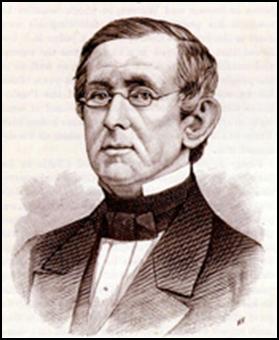
|
Charles C. Stratton Whig
Stratton was born in the South Jersey town of Swedesboro in Stratton Hall (built in 1794 by his father Dr. James Stratton). He graduated from Rutgers College in 1814. He returned to Swedesboro where owned a farm. A member of the Whig Party, he entered politics and became a member of the New Jersey General Assembly (the lower house of the New Jersey Legislature) in 1821. He ran for Congress in 1836 and won. However, Congress refused to allow him to take his seat. This was the "Broad Seal War" controversy. Following the closely contested election of 1838, two groups sought admission to the United States Congress from New Jersey. Both held commissions bearing the great (broad) seal of the state; only the Whig commissions, however, were legally executed and signed by the state governor, William Pennington. Charging their opponents with election fraud and facing loss of control of the House of Representatives, the Democratic Party majority in the House refused to seat all, including Stratton, but one Whig (who won with an overwhelming majority). For a year and a half, New Jersey had only one congressman. When it was proved that the county clerks in Cumberland and Middlesex counties had suppressed the returns in certain townships that would have given the Democrats a majority, the House, on February 28, 1840, seated the five Democratic claimants leaving Stratton out. He ran again in 1838 and won again. This time he was able to serve. After one term, he did not run for re-election. He served on the 1844 convention that revised the New Jersey state constitution. The new state constitution called for the direct election of a governor to serve a three-year term. Under the new provision, Stratton ran as the Whig candidate opposing the powerful railroad interest of the state, namely the Camden and Amboy Railroad. His opponent was Democrat John R. Thomson, who was a stockholder in the railroad and a vigorous advocate of internal improvements. Stratton won the election. He is the only Governor elected from Gloucester County Stratton served one term and did not run for re-election. He returned to Swedesboro living in Stratton Hall. In 1854, he married Sarah Taggart of Philadelphia. His health started to decline within a few years, so he traveled and lived in Europe in 1857. After a year, he returned home where he died at Stratton Hall the following year. Although he had no children, Stratton had two notable nephews. Benjamin Franklin Howey was a Republican member of the 48th United States Congress (1883–1885). Another nephew, Thomas Preston Carpenter, served as an Associate Justice on the New Jersey Supreme Court. |
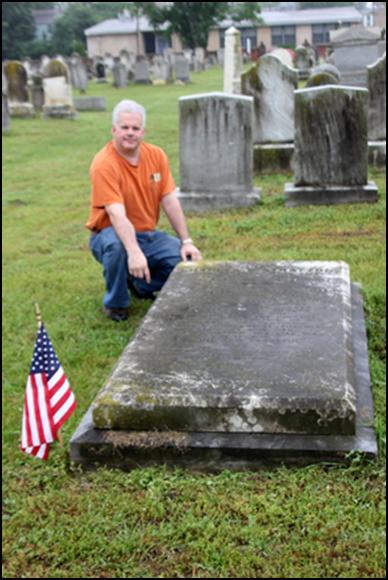
|
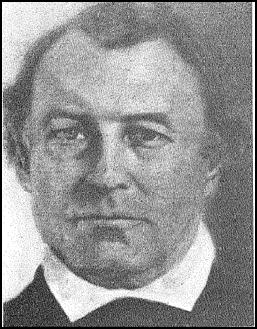
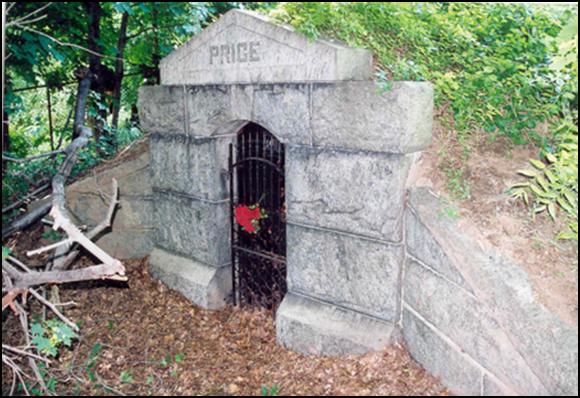
Rodman McCamley Price 17th
Governor of New Jersey Democrat Served: January 17, 1854 to January 20, 1857
Price graduated from the Lawrenceville Prep school and attended Princeton University. Poor health forced him to leave before he graduated. He studied law and then became an officer in the U.S. Navy in 1840 where he served mostly in a legal capacity. He served in the navy throughout the Mexican War. After the war, Price was part of the convention that drafted California's state constitution. Price was lucky enough to be living in California in 1849 when gold was discovered. He made a fortune and then returned to New Jersey in 1850 and became involved in politics. A democrat, he won a seat in the U.S. House of Representatives in 1851. Price served one term and was defeated for re-election in 1852 by Alexander Cumming McWhorter Pennington, the cousin of Governor William Pennington (above). In 1853, he
ran for governor of New Jersey and won. As governor, he became known as
"father of the public school system of New Jersey." He served one
three-year term as governor and was succeeded by Republican William A.
Newell. Later, he established a ferry from Weehawken to New York City and
engaged in the quarrying business and in the reclamation of lands along the
Hackensack River. In 1861, he was New Jersey's delegate to the Peace
Convention that tried unsuccessfully to find a compromise between the North
and the South and avoid a civil war. |

 From there we drove south along Route 507 toward Paterson. We stopped in a
Starbucks in Glen Rock for a frappuccino break. We arrived at Cedar Lawn by 4
PM. I knew the locations of the two dead governors here, but the cemetery
doesn't identify the sections you’re in. It's like knowing an address but
finding none of the streets or houses with signs. Anyway, we set out in the
cemetery, which is quite large. I had been here once before to get dead
vice-president Garret Hobart. After an hour, we had both of them (Philemon
Dickerson and John Griggs) and headed home. Not a bad afternoon, three dead
governors and a mocha frappuccino.
From there we drove south along Route 507 toward Paterson. We stopped in a
Starbucks in Glen Rock for a frappuccino break. We arrived at Cedar Lawn by 4
PM. I knew the locations of the two dead governors here, but the cemetery
doesn't identify the sections you’re in. It's like knowing an address but
finding none of the streets or houses with signs. Anyway, we set out in the
cemetery, which is quite large. I had been here once before to get dead
vice-president Garret Hobart. After an hour, we had both of them (Philemon
Dickerson and John Griggs) and headed home. Not a bad afternoon, three dead
governors and a mocha frappuccino.|
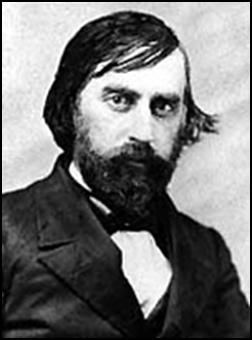
William Augustus Newell 18th
Governor of New Jersey Republican Served: January 20, 1857 to January 20, 1860
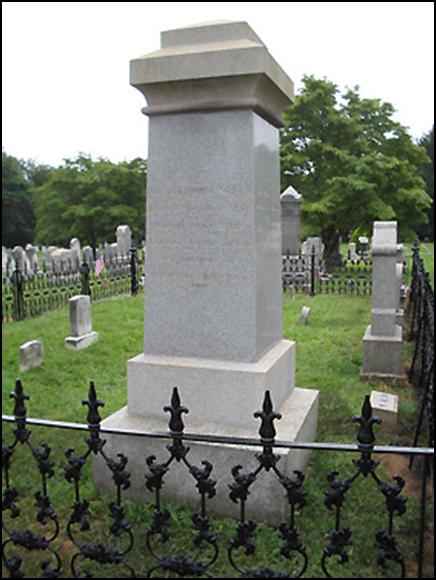
While governor, Newell presided over the Court of Pardons, and in late 1857 was involved in a major controversy. James P. Donnelly, a medical student at NYU who was from a New York City Irish family was convicted of murdering Alfred S. Moses with a knife while working at a summer job. He was sentenced to death in a Monmouth County court. To the Irish Catholics of New Jersey, this quickly became a large social and political issue, as he was convicted and sentenced by a Protestant judge and jury on what they saw as doubtful evidence. After Donnelly's appeals ran out, he sought commutation to a life sentence. While the Court of Pardons voted 6 to 2 against commuting the sentence with Newell voting with the majority there was an accusation that it had been a tie vote and that Newell cast the deciding vote for the execution. This accusation would haunt Newell's political career later on. On January 8, 1858, Donnelly was hung in front of the Monmouth courthouse, where a huge crowd heard him speak eloquently about his innocence for over two hours. When Newell left as governor in 1860 (he was followed by fellow Republican Charles Smith Olden), a year before the outbreak of Civil War, he was now fully in the Republican Party (The "Know Nothings" had been absorbed by the Republican Party). He attended the Republican National Conventions in Chicago in both 1860 and 1864, both times nominating Abraham Lincoln. Lincoln appointed Newell to the Life-Saving Service of New Jersey and he held this office until he re-entered congress in 1865. Newell was nominated for Congress in 1864 and won on a platform of supporting the war. But in 1866 he was defeated in his bid for re-election to Democrat and Civil War general Charles Haight, in part because of Newell's strong anti-immigrant past and his role in the Donnelly case. He returned to medicine, but unsuccessfully sought the Republican nomination for Congress in 1868. He did win the Republican nomination for Congress in 1870 but lost the election to Democrat Samuel Carr Forker. He ran for governor of New Jersey again in 1877, but lost to the popular Civil War general George B. McClellan. Again, his role in the Donnelly case was an issue, particularly to the Irish living in Jersey City. A Jersey City newspaper wrote that Newell's actions in the Donnelly case had been, "prompted by his intense hatred of foreigners." In 1880, President Rutherford B. Hayes appointed Newell to be the Governor of Washington Territory. He supported many of the same policies he did while he was Governor of New Jersey: strengthening life-saving systems on the Pacific Ocean, lower taxes, temperance, and forced acculturation of Native Americans. He served until 1884, and then was United States Indian inspector for a year. He then resumed the practice of medicine, this time in Olympia, Washington and remained there 14 more years, until his wife died. Then, in 1899, at the age of 82, he returned to Allentown, resumed the practice of medicine, and took an active role in the Monmouth County Historical Association. He died two years later at age 84 and is buried in a family plot in the Presbyterian cemetery near his home. |
Pick Time Periods

|
This website created and maintained by
Frank McGady E-mail me
with any comments, questions or corrections you might have |

